
How to Make an NDIS Complaint — Plain Language Guide
Step-by-step, accessible instructions for making a complaint about an NDIS provider or the NDIA — including AAC cards, tips for evidence, and where to get help.
If something about your NDIS support wasn’t safe, respectful or worked badly for you, you are entitled to make a complaint. Complaints help fix problems and protect others — and you can ask for help if the forms or process are hard to use.
This guide explains official complaint routes, simple steps to write a complaint, easy ways to give evidence (including AAC cards), and where to get advocacy help.
What is an NDIS complaint?
You can complain when care or conduct by an NDIS provider or worker isn’t safe, respectful, or meets poor standards. Complaints about providers go to the NDIS Quality and Safeguards Commission. Concerns about NDIA planning decisions may follow different review paths — an advocate can help you choose the right route.
Your 6-Step NDIS Complaint Plan
Choose the right route
✓ Pick the destination
- NDIS providers & workers → NDIS Quality & Safeguards Commission.
- NDIA planning/decisions → ask an advocate; different review/appeal paths may apply.
- Not sure? An advocate can help you lodge in the right place.
Quick link: NDIS Commission complaint page
Set up accessibility supports

✓ Ask for the format you need
- Request Easy Read, Auslan, captions, larger text, or a phone call.
- Use AAC or image cards to say “I want to make a complaint”.
- Let them know your preferred contact method.
Download: AAC Complaint Card (PNG)
Draft your complaint (short & factual)

✓ Use this mini-template
- Who — provider/worker/service.
- What — one sentence: “On 12 May, I was not given my medication.”
- When — date/time.
- Where — location/service.
- Why it matters — impact on you.
- Evidence — photos, screenshots, audio, witnesses.
- What you want — apology, investigation, change in practice.
Worksheet: Short complaint draft
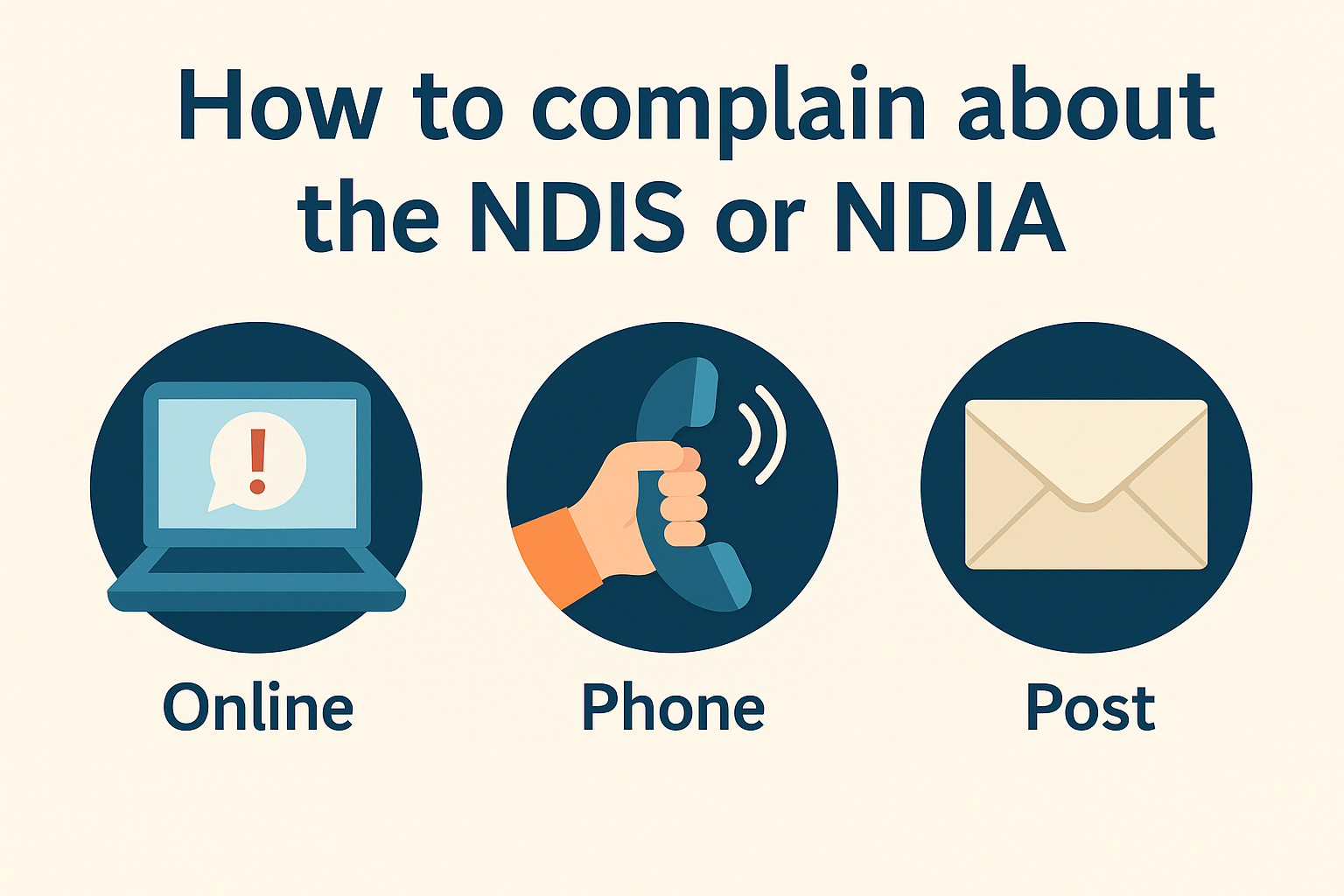
Lodge your complaint

✓ Pick your channel
- Online: NDIS Commission form
- Phone: 1800 035 544 (Mon–Fri, 9am–5pm local time)
- Other: State/territory services or NDIA (for planning issues). Advocates can lodge for you with consent.
Tip: Save copies of what you send and any reference number.
If you’re in immediate danger

✓ Safety first
If someone is at risk of serious harm, call 000 or your local crisis service immediately. If the complaint concerns urgent abuse or neglect, tell the Commission it’s an urgent safety matter.
What happens next?

✓ After you submit
- Receipt: You should get confirmation and a reference number.
- Assessment: Commission assesses risk and decides actions.
- Investigation / resolution: They may investigate, work with the provider, or support local resolution.
- Outcome & review: You’ll be told the result. If unhappy, there are review options — an advocate can help appeal.
Downloads & quick links
AAC Complaint Card
-
PNG: Download AAC Card
Official complaint route
-
NDIS Commission: Make a complaint
Worksheet
-
Short draft form: Open worksheet
Need help? Ask an Advocate
If the process feels overwhelming, we can help in Easy Read, Auslan, audio or over the phone.
Coming soon: Upload & convert
We’re building a tool so you can upload a screenshot, photo or short voice note. With your permission, we’ll help turn that into a formal complaint and lodge it with the right body.
Final note: Speaking up takes courage. Complaints improve services and protect other people. If it feels too big, get help — an advocate can make the process safer and simpler.


.png)
.png)
.png)
.png)
.png)
.png)



.png)
.png)
.png)